How to Maintain Your Results After Fat Freezing Suffolk
People often come to us after fat freezing and ask what they should do next.
Some are worried that the treated fat will return. Others want to know whether they can speed up the process or lose more weight while they wait for the result to develop.
Fat freezing can reduce the thickness of fat beneath the skin in a selected treatment area, but it is not a general weight-loss treatment. What happens afterwards will depend partly on your body’s natural response and partly on whether your weight remains reasonably stable.
Understanding this difference can help you approach the weeks after treatment with realistic expectations.
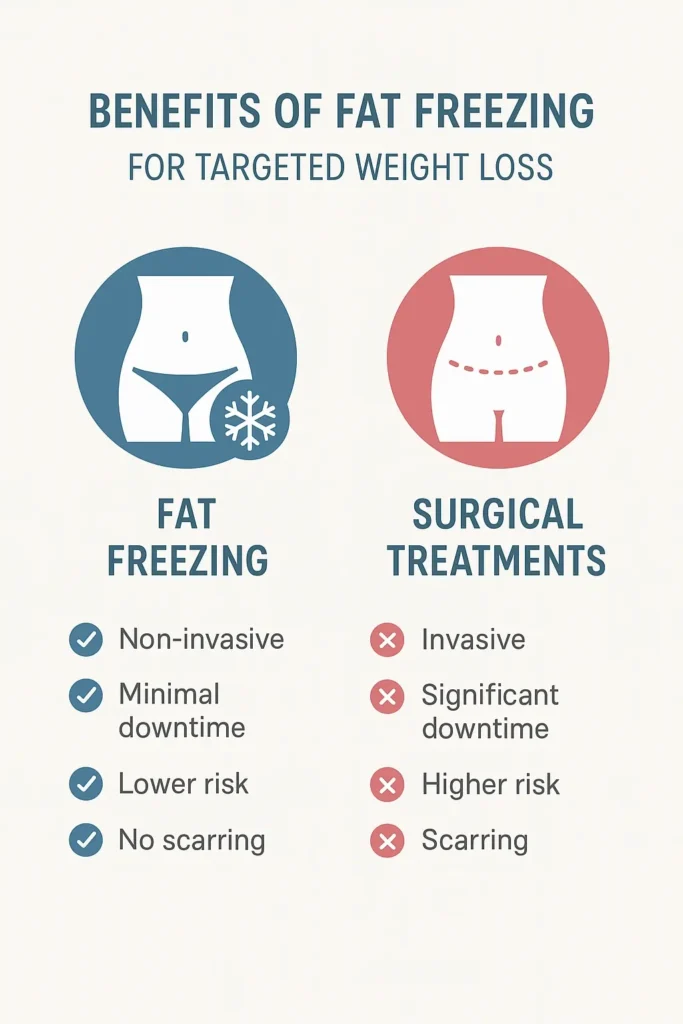
What Happens to the Fat After Treatment?
Fat freezing, also known as cryolipolysis, uses controlled cooling to damage fat cells beneath the skin in a chosen area.
Following treatment, the body gradually processes the affected cells. This does not happen overnight, which is why the treated area may look unchanged at first.
Some people begin to notice a difference within several weeks, while the area may continue to change over the following months. Your own result will depend on factors such as the treatment area, the amount of localised fat present and how your body responds.
Fat freezing is intended for body contouring rather than significant weight loss. It is most commonly considered by people who are already near a stable weight but have a particular area that has been difficult to change through diet and activity alone.
Can Fat Return After Fat Freezing?
The fat cells affected by the treatment are gradually removed from the treated area.
However, fat cells elsewhere in the body remain, and the remaining cells in the treated area can still become larger if you gain weight.
This means the treated contour may be long-lasting, but it is not protected from future changes in body weight.
A small amount of weight fluctuation is normal. Significant or repeated weight gain may make the result less noticeable, even though the treated cells themselves have been affected.
Do You Need to Lose More Body Fat Afterwards?
Not necessarily.
Many people choose fat freezing because they are happy with their general weight but feel self-conscious about one particular area.
You do not have to begin a strict diet or an intense exercise programme after treatment. In fact, dramatic short-term changes can be difficult to sustain.
A more realistic goal is to maintain a reasonably stable weight through everyday habits that work for you.
If your wider goal is to reduce your overall body weight, this usually requires changes to your food intake, activity levels and other lifestyle factors. Fat freezing alone cannot achieve whole-body weight loss.
What Should You Do After Fat Freezing?
There is no special detox plan that removes treated fat cells faster.
Your body carries out the process gradually, and there is no guaranteed way to speed it up. The most helpful approach is usually to look after your general health and follow the aftercare instructions provided by your practitioner.
Return to normal activity when comfortable.
Most people can continue with their usual daily routine after treatment, although the area may feel tender, numb or sensitive for a while.
You should listen to your body and avoid any activity that makes the treated area feel significantly more uncomfortable.
Keep your weight reasonably stable.
You do not need to weigh yourself every day or follow an overly restrictive diet.
Instead, focus on habits that you can maintain over time. Regular meals, sensible portions and a varied diet are generally more useful than a short-lived “fat-burning” plan.
Continue moving regularly
Walking, swimming, cycling, strength training or any other form of movement you enjoy can support general health and weight management.
The best activity is usually one you are comfortable repeating, rather than an intense routine you are unlikely to maintain.
Follow your individual aftercare advice.
Aftercare may vary depending on the device used, the treatment area and your practitioner’s protocol.
You may be advised about massage, clothing, exercise or managing temporary sensitivity. Follow the instructions given to you rather than relying on generic advice found online.
Give the result time to develop.
It is understandable to check the area frequently, but doing this can make gradual changes difficult to recognise.
Photographs taken under similar lighting and from the same angle may provide a more useful comparison than checking the mirror every day.
Your practitioner may also arrange a review to assess the treated area once enough time has passed.
Will Drinking More Water Help You Lose Fat Faster?
Staying hydrated is part of looking after your general health, but drinking extra water will not directly flush fat cells or toxins out of the treated area.
There is no need to force yourself to drink excessive amounts after treatment.
Drink according to your usual needs unless a healthcare professional has given you different advice.
Should You Follow a Special Diet?
There is no specific diet required after fat freezing.
You may find it helpful to choose meals that balance protein, vegetables, fruit, wholegrains, and other foods that suit your dietary needs.
The aim is not perfection. What matters most for maintaining a contouring result is avoiding substantial weight gain over time.
Crash diets are unlikely to be helpful because they are difficult to sustain and may lead to repeated weight fluctuations.
Can Exercise Improve the Result?
Exercise can support fitness, muscle strength and weight management, but it does not directly control how quickly your body processes the treated cells.
It may improve your overall shape or help you maintain a stable weight, which can complement the visible result of treatment.
Exercise should therefore be viewed as part of a healthy routine rather than as a way to speed up the fat-freezing process.
When Should You Expect to See a Difference?
Fat freezing results develop gradually.
You should not expect the area to appear noticeably smaller immediately after your appointment. Early swelling can sometimes make it look temporarily fuller.
Some changes may become visible in the coming weeks, while the outcome may take several months to assess.
Not everyone responds in the same way, and no responsible practitioner should guarantee a particular reduction or body shape.
What If You Cannot See a Result?
There are several possible reasons why a change may be difficult to see.
The area may still be developing, the initial fat pocket may have been small, or your response may be more subtle than expected.
Weight changes, skin laxity and muscle tone can also influence how the area looks.
If enough time has passed and you are unsure about your result, arrange a review with your practitioner. They can compare photographs, assess the area and discuss whether further treatment may be appropriate.
Additional sessions should only be recommended after considering the previous response and your individual goals.
Are There Any Symptoms You Should Report?
Temporary redness, swelling, bruising, tenderness, tingling and numbness can occur after fat freezing.
Contact your practitioner if your symptoms are severe, worsening, or cause concern.
You should also seek advice if the treated area becomes noticeably larger or firmer, or develops an unusual raised shape, in the months after treatment. A rare complication known as paradoxical adipose hyperplasia can cause fatty tissue in the treatment area to grow rather than shrink and may require medical or surgical treatment.
One of the Questions We Hear Most Often
Patients often ask us, “What do I need to do to make sure the treatment works?”
The honest answer is that there is no single food, drink, supplement or exercise that guarantees a result.
The treatment begins a gradual process within the targeted fat cells. Your role afterwards is mainly to follow the aftercare advice, allow sufficient time, and avoid major weight changes where possible.
During your review, we can assess the treated area and discuss the changes that have occurred.
Why Choose LA LIPO?
At LA LIPO, treatment begins with an assessment of the area you would like to address.
We will discuss whether fat freezing is appropriate, what it can and cannot achieve, and what result may be realistic for you.
We will also explain:
- How the treatment is carried out
- What you may feel during and after the session
- Possible side effects and complications
- How long results may take to develop
- What aftercare is recommended
- Whether more than one session may be needed
Fat freezing is not suitable for everyone, and it may not be the right treatment for every type of body concern.
If we believe a different treatment or medical assessment would be more appropriate, we will explain this before you make a decision.
Frequently Asked Questions
Is fat freezing a weight-loss treatment?
No. Fat freezing is intended to reduce localised fat beneath the skin in selected areas. It is not designed to treat obesity or produce significant overall weight loss.
Can I gain weight after fat freezing?
Yes. The remaining fat cells in your body can still enlarge if you gain weight, which may affect the visible result.
How long do fat freezing results last?
The change may be long-lasting when your weight remains reasonably stable. However, future weight gain, ageing and other changes to your body can affect the treated area.
Can I speed up the result?
There is no guaranteed way to accelerate the body’s response. Follow your practitioner’s aftercare advice and allow sufficient time for the area to change.
Should I massage the area?
Some treatment protocols include massage, while others may differ. Only massage the area if your practitioner has advised you to.
How soon can I exercise?
Many people return to normal activity quickly, but this depends on how the area feels and the advice provided after treatment.
Will drinking water improve the result?
Adequate hydration supports overall health, but drinking excessive amounts of water will not directly remove treated fat cells faster.
Can I have another session?
Possibly. A further session may be considered once the area has had enough time to respond and your practitioner has reviewed the result.
What if my weight changes during the process?
Minor fluctuations are normal. More significant weight gain or loss can make it harder to accurately judge the effect of treatment.
Is fat freezing suitable for loose skin?
Fat freezing targets fat rather than loose skin. If skin laxity is your main concern, a different treatment may be more appropriate.
Considering Fat Freezing?
If you have a particular area of localised fat that has been difficult to change, a consultation can help you understand whether fat freezing is suitable.
We will assess the area, discuss your goals and explain what you may realistically expect before any treatment takes place.
Contact LA LIPO to arrange a consultation and receive personalised advice about the most appropriate option for you.